Card grading research lab

We read the grading manuals, so you can predict the grade.

Before The Grade analyzes the published standards of the major grading companies and turns them into measurable tests. Upload photos of a card and get a predictive condition report that shows its work, before you spend a cent on grading fees.

Analyze a card free See a real report

1 free report when you confirm your email. No card required.

Inspecting front050/XY-P
Front of a Japan Team Pikachu promo card under inspection
Centering
10.0
Corners
9.0
Edges
9.0
Surface
10.0
Readings from a real report

Research built on the published standards of

  • PSA
  • BGS
  • CGC
  • SGC

From rulebook to report

Most pre-grading tools give you a number. We give you the research behind it, so you can judge the prediction yourself.

Watch first

The whole process in 35 seconds

How to set up the card, which photos to take, and what happens next. New accounts watch this once before the first analysis, because the photos decide how good the report is.

0:00 / 0:35

Set up
Lay your card on a plain, dark, matte surface, in soft, even light. Avoid glare.

How to do your first scanThe four steps and the photo guide, written out.Show steps
  1. We study the rulebooks

    Grading companies publish their standards for centering, corners, edges and surface. We read and analyze them, then turn each rule into a measurable test.

  2. You photograph the card

    Front and back are required, and you can add up to six photos in total. Phone photos work, and the report tells you when a photo is too weak to trust.

  3. The lab runs the measurements

    Centering is measured in pixels, every corner and edge is inspected up close, and each finding is scored by a published rule.

  4. You get a predictive report

    A full report with an estimate, the evidence behind it and the exact scoring rules. Saved to your account and downloadable as a PDF.

Before you upload

How to photograph your card

The report can only be as good as the photos it is built from. Two photos are required and you can add up to 6. Every extra photo gives the lab more to check, so add the ones that show what the flat shots can't.

Your photo set

2 required · 6 maximum

  1. 1Required

    Front

    Flat, whole card in frame

  2. 2Required

    Back

    Flat, whole card in frame

  3. 3Optional

    Front, tilted

    Tilt the front toward a light so it skims the surface. Fingerprints and fine scratches only show at an angle.

  4. 4Optional

    Back, tilted

    Same angle on the back. Both sides are checked for surface marks.

  5. 5Optional

    Corner close-up

    The corner you are least sure about

  6. 6Optional

    Edge or flaw close-up

    Any edge with whitening or a nick, or a dent or crease the flat shots may hide

Front and back alone give you a full report. We recommend one or two extra photos of each side tilted toward a light, since that is the only way fingerprints and fine scratches show up. They help most on holo and reflective cards.

  • Background

    Do: A plain, matte, solid surface that contrasts with the card border: dark grey or black for light borders, light grey for dark borders.

    Avoid: Patterns, wood grain, glossy desks, tablecloths or anything that blends into the border.

  • Lighting

    Do: Soft, even light from two sides, or a bright window with no direct sun. The whole card should look equally lit.

    Avoid: Flash, a single harsh lamp, or light from one side that throws a shadow across the card.

  • Camera position

    Do: Directly above the card with the phone parallel to the table. Fill most of the frame and leave a thin margin around all four edges. Tap to focus.

    Avoid: Shooting from an angle, cropping any edge off, or zooming in digitally. Move closer instead.

  • The card itself

    Do: Take it out of the sleeve, toploader or case. Wipe the surface gently with a dry microfibre cloth first. Fingerprints, dust and grime are now flagged in the report, and they can hide the real surface condition.

    Avoid: Photographing through plastic, which adds glare and hides edge detail, or applying filters and edits.

This is what you get, in full

A real report from the lab, unedited. It goes well beyond centering: six layers of evidence, so every number can be traced back to something visible on the card. Open it and scroll through the whole thing.

Real condition report

Japan Team Pikachu 050/XY-P

9.5 overall estimate · 4 subgrades · every finding pinned and scored · 16 pages as a PDF

Open full report

Before The Grade

Condition report

Japan Team Pikachu · 050/XY-P

Game
Pokémon
Photos analysed
Front and back
Findings logged
4
Report format
16-page PDF

Research estimate only. These numbers are not a certified grade from any grading company and are not a promise of one.

AI research estimate

Overall research estimate

9.5of 10
  • Centering10.0

    Front 49.4/50.6 left-right and 52.2/47.8 top-bottom, measured at 100% confidence. Back 47.6/52.4 and 55.5/44.5, measured at 53% confidence.

  • Corners9.0

    2 scored defects: a minor nick and minor whitening.

  • Edges9.0

    2 scored defects: minor whitening and a minor nick.

  • Surface10.0

    No physical defects at or above the scoring confidence threshold.

Human review required before this estimate is relied on.

1 · The two photos this report is built from, with every finding pinned

Front of Japan Team Pikachu, as photographed and analysed1
Front photo · 1 finding pinned
Back of Japan Team Pikachu, as photographed and analysed234
Back photo · 3 findings pinned

2 · Centering measured on both faces

Front

100% measurement confidence
Left / Right49.4 / 50.6
Top / Bottom52.2 / 47.8

1049 × 1448 px analysed · card outline auto-detected at 94% confidence

Back

53% measurement confidence
Left / Right47.6 / 52.4
Top / Bottom55.5 / 44.5

1055 × 1463 px analysed · card outline auto-detected at 93% confidence

3 · Photo quality audit, so you know how far to trust it

Front photo

2 checks need attention

  • Card resolution≈ 414 ppi · pass ≥ 600 ppi, warn ≥ 300Warning
  • Surface focusLaplacian variance 657 · pass ≥ 120, warn ≥ 50Pass
  • Corner & edge focusEdge blur ≈ 2.3 px · pass ≤ 2 px, warn ≤ 3.5 pxWarning
  • Glare / clipped highlights0.01% of card pixels · pass ≤ 0.5%, warn ≤ 3%Pass
  • Crushed shadows0.10% of card pixels · pass ≤ 0.5%, warn ≤ 3%Pass
  • Boundary detection94% confidence · pass ≥ 75%, warn ≥ 50%Pass
  • Perspective distortion2.3° max corner deviation · pass ≤ 3°, warn ≤ 8°Pass
  • Framing margin2.5% of frame · pass ≥ 2%, warn ≥ 0.5%Pass

Back photo

3 checks need attention

  • Card resolution≈ 418 ppi · pass ≥ 600 ppi, warn ≥ 300Warning
  • Surface focusLaplacian variance 168 · pass ≥ 120, warn ≥ 50Pass
  • Corner & edge focusEdge blur ≈ 2.2 px · pass ≤ 2 px, warn ≤ 3.5 pxWarning
  • Glare / clipped highlights0.00% of card pixels · pass ≤ 0.5%, warn ≤ 3%Pass
  • Crushed shadows0.01% of card pixels · pass ≤ 0.5%, warn ≤ 3%Pass
  • Boundary detection93% confidence · pass ≥ 75%, warn ≥ 50%Pass
  • Perspective distortion2.3° max corner deviation · pass ≤ 3°, warn ≤ 8°Pass
  • Framing margin0.9% of frame · pass ≥ 2%, warn ≥ 0.5%Warning

4 · Every finding, located and scored

  1. 1

    Whitening 65% confidence

    Tiny pinpoint white nick or wear visible along the edge perimeter.

    Front · Right edge

    MinorSuspected until reviewed
  2. 2

    Nick 62% confidence

    Small irregularity with slight exposed white paper along the right edge just below the corner radius.

    Back · Top-right corner

    MinorSuspected until reviewed
  3. 3

    Whitening 65% confidence

    Tiny speck of whitening where the corner curvature meets the bottom border.

    Back · Bottom-left corner

    MinorSuspected until reviewed
  4. 4

    Nick 78% confidence

    Small white nick or whitening speck on the card edge.

    Back · Right edge

    MinorSuspected until reviewed

5 · Zoomed inspection of all four corners, four edges and the surface, front and back

Front

Corners
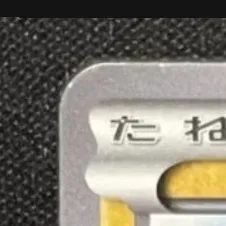
  • Front top-left corner, zoomed

    Top-left

    226×226 px · sharpness 193

    Clean, smooth cut. The bright highlight on the apex is normal edge reflection, not damage.

    No defects found here
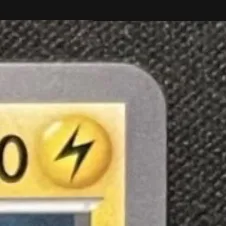
  • Front top-right corner, zoomed

    Top-right

    226×226 px · sharpness 137

    Clearly visible against a dark background with no noticeable wear.

    No defects found here
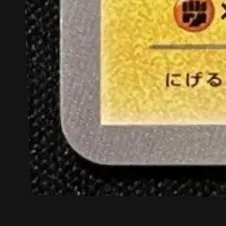
  • Front bottom-left corner, zoomed

    Bottom-left

    226×226 px · sharpness 243

    Clean cutting with no notable defects.

    No defects found here
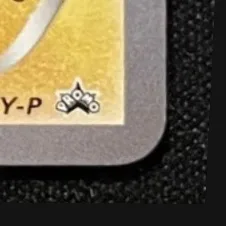
  • Front bottom-right corner, zoomed

    Bottom-right

    226×226 px · sharpness 191

    Clean condition with no visible defects.

    No defects found here

Edges

  • Front top edge, zoomed

    Top

    713×131 px · sharpness 233

    Well cut. Isolated bright specks are consistent with surface dust, not chipping.

    No defects found here

  • Front bottom edge, zoomed

    Bottom

    713×131 px · sharpness 953

    Cleanly cut and free of chipping, nicks or whitening.

    No defects found here

  • Front left edge, zoomed

    Left

    131×1112 px · sharpness 1161

    Clean and sharp with no chipping, fraying or whitening.

    No defects found here

  • Front right edge, zoomed

    Right

    131×1112 px · sharpness 1115

    Mostly clean cut with a couple of pinpoint white specks.

    Finding 1 · Whitening · Minor

Surface
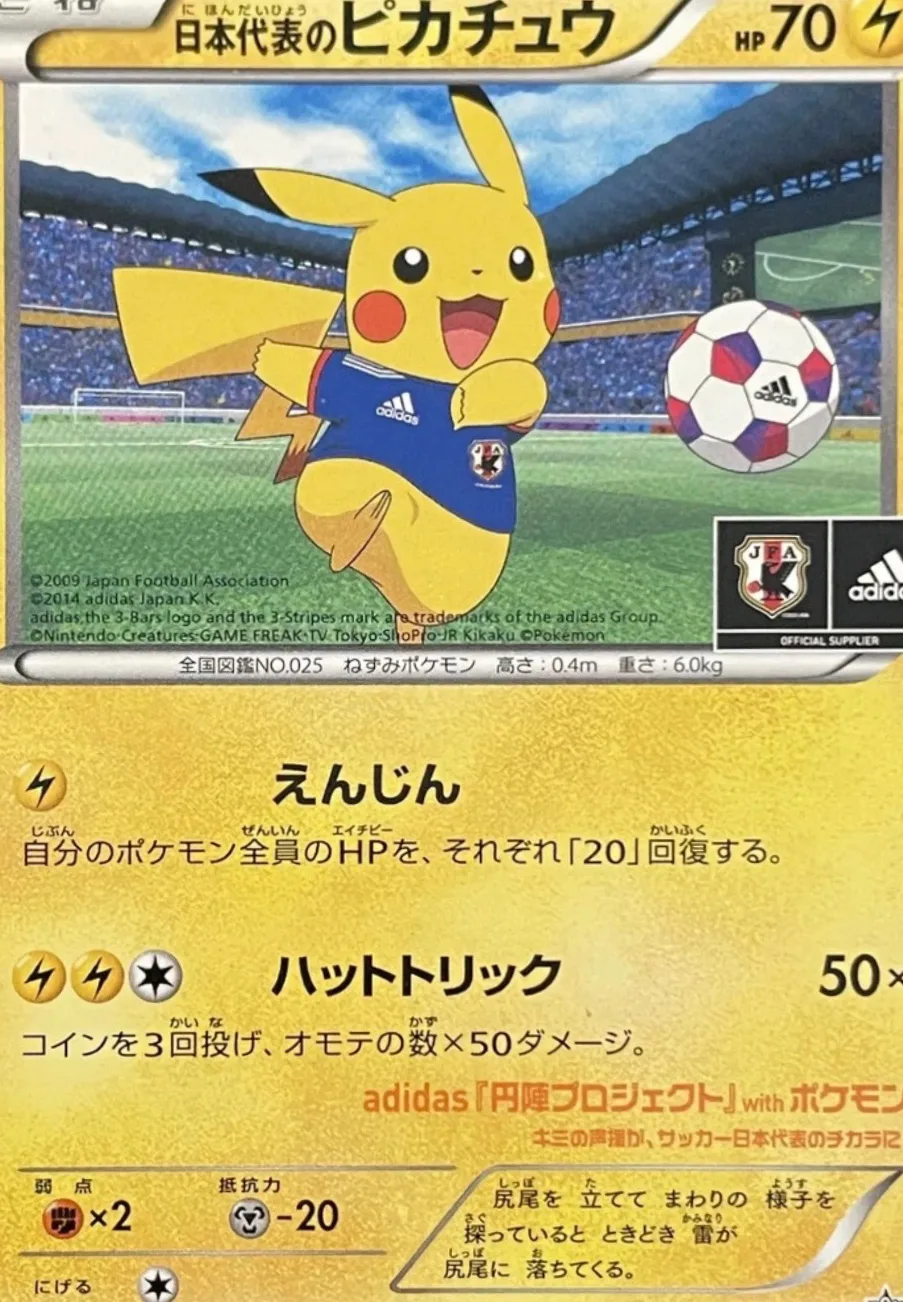
  • Front full surface surface, zoomed

    Full surface

    903×1302 px · sharpness 657

    Balanced lighting. No scratches, indentations, creases or print defects detected.

    No defects found here

Back

Corners
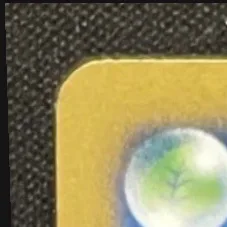
  • Back top-left corner, zoomed

    Top-left

    227×227 px · sharpness 122

    Clean and sharp with no significant wear or corner damage.

    No defects found here

  • Back top-right corner, zoomed

    Top-right

    227×227 px · sharpness 91

    Corner curve is intact, with minor edge roughness along the upper-right edge.

    Finding 2 · Nick · Minor
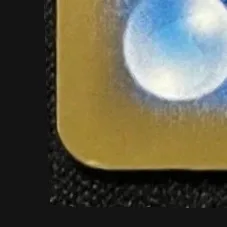
  • Back bottom-left corner, zoomed

    Bottom-left

    227×227 px · sharpness 68

    Clearly visible against a dark background.

    Finding 3 · Whitening · Minor
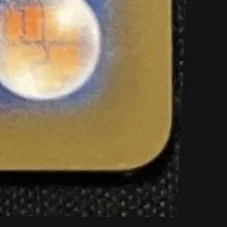
  • Back bottom-right corner, zoomed

    Bottom-right

    227×227 px · sharpness 46

    Clean with smooth contours and no evident whitening or wear.

    No defects found here

Edges

  • Back top edge, zoomed

    Top

    717×132 px · sharpness 202

    Clean and well defined with no significant wear or whitening.

    No defects found here

  • Back bottom edge, zoomed

    Bottom

    717×132 px · sharpness 139

    Cleanly cut with no apparent whitening or damage.

    No defects found here

  • Back left edge, zoomed

    Left

    132×1125 px · sharpness 609

    Sharply focused, clean cut with no observable defects.

    No defects found here

  • Back right edge, zoomed

    Right

    132×1125 px · sharpness 535

    Well defined, with a single minor white nick along the border.

    Finding 4 · Nick · Minor

Surface

  • Back full surface surface, zoomed

    Full surface

    907×1315 px · sharpness 168

    No obvious scratches, creases, dents or stains under the available lighting.

    No defects found here

6 · The scoring rules, printed in full

  • Centering: the larger share of each axis is compared with a table. Front: 55 or better scores 10, 60 scores 9, 65 scores 8, and so on down. The back is more forgiving. The centering score is the lower of the reliably measured faces.
  • A centering measurement below 50% confidence is shown but not scored. If no face is reliably measured, the centering subgrade is withheld.
  • Corners, edges and surface start at 10 and lose 0.5 per minor defect, 1.5 per moderate, 3 per major and 5 per severe. The worst single defect also caps the score.
  • Only findings at 50% confidence or higher are scored. Lower-confidence findings appear as warnings for a human to check.
  • Print lines and print spots are printing traits, not damage. They never touch the surface subgrade, but the worst one can cap the overall estimate.
  • Overall is the mean of the four subgrades, capped at the lowest subgrade plus 1, rounded down to the nearest 0.5.
  • A face without a photo withholds corners, edges and surface. It is never assumed clean.
  • A 10 from photographs means no defects were detected under the captured lighting. It is not a verified flawless card.

Built to be checked, not just believed

A prediction is only useful if you know how much to trust it. Every report is designed around that.

  • Measured centering

    Left-right and top-bottom ratios for both faces, with a confidence score on every measurement.

  • Zoomed inspection

    All four corners, all four edges and the surface, front and back, each with its own written observation.

  • A located defect log

    Every nick, whitening spot and scratch with its face, position, severity and confidence.

  • Photo quality audit

    Resolution, focus, glare, shadows, perspective and framing checked against targets, so you know how far to trust the numbers.

  • Scoring shown in full

    The deduction rules, the caps and the rounding are printed in the report. Nothing is a black box.

  • Honest about uncertainty

    Low-confidence measurements are flagged, not scored. A 10 from photos is never presented as a verified flawless card.

Reports are research estimates, not certified grades, and Before The Grade is not affiliated with PSA, BGS, CGC or SGC. Failed analyses never use a credit.

Run your first card through the lab

Analyze a card free

Get grading research and new tools

Occasional emails on grading standards, card condition and new free tools.